

Die Casting Mold Design
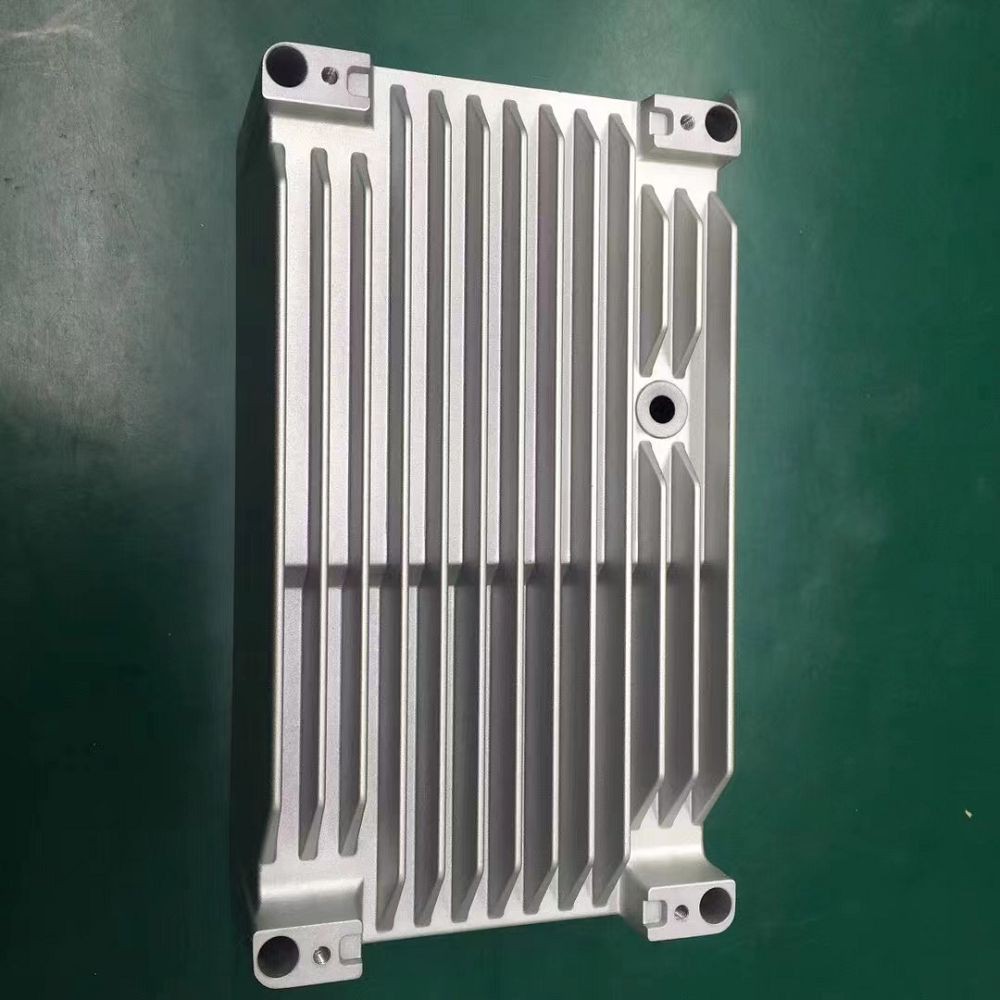
Description of Die casting mold design
We are committed to satisfying our customers' quality needs, as we believe that customer satisfaction is the key to success. We maintain strict quality control and our team of professional engineers delivers on time. We are confident that our products are of the highest quality and that our moulds provide excellent value.
We strive to meet our customer's objectives in terms of product quality, cost effectiveness, and timeliness. We are fully committed to meeting the highest standards of performance in order to ensure the reliability of our product. We take all our customer’s feedback and requirements into consideration, allowing us to deliver highly accurate and cost effective solution.
At LAUNCESTON, we strive hard to maintain our quality and integrity in every product, ensuring superior die-casting mould design that you can rely on.
Details of Die casting mold design
|
Product Name: |
Die casting mold design |
||
|
Core Material: |
S136 Quenching hardening |
Brand: |
OEM&ODM |
|
Product Size: |
Based on the processing size of our standard mold, we can also according to the customer's 3D drawings or samples. |
||
|
Available material: |
Aluminium& kirsite |
||
|
Consistency of Parts: |
Less than +/-0.03 inch |
||
|
Place of Origin: |
CHINA&USA |
MOQ: |
Negotiable |
|
Certificate: |
GB/T 19001-2016 idt ISO9001:2015 GB/T24001-2016 idt ISO14001:2015 |
||
|
Plastic sample: |
Free |
Packaging: |
Plastic pallets |
|
MOULD TIME |
20-25 DAYS |
Lead time: |
10-25 DAYS |
Our Advantages
LAUNCESTON has sixteen years of experience in mold manufacturing and die casting forming. Our molds are designed to customer requirements, and strive for precision of the product and for ease of assembly. We have been able to achieve satisfactory results for our customers, as our molds are often delivered T0 from trial to completion.
Our Factory promises to deliver both superior quality components and cost effectiveness. Our advantages include the ability to manufacture small quantity items and the ability to maintain high standards. In order to stay competitive, we have always put in efforts to explore new technologies, to reduce cycle time and maintain consistent quality that meets customer requirements.
Our mission
We appreciate the confidence our customers place in us to deliver the highest level of services and products. Our mission is to provide our customers with superior craftsmanship and superior service. Our goal is to be your partner, to provide you with the optimal results in dis cast injection molding.
FAQ
Q: What is the core competition advantage of our factory?
A: High quality, competitive price, improving after-sales service is our core competition advantage.
Q: How did you handle the measurement report?
A: According to your 3D or 2D drawing, we provide measurement reports of samples after we first try out. We offer you reports upon request.
What is the best material for die casting molds?
Die-casting molds are a key tool for manufacturing die-cast parts; their quality and performance have a direct impact on product quality and production efficiency. Choosing the right material is very important for the performance and life of the mold. The following are several commonly used die casting mold materials:
H13 steel: H13 steel is a tool steel with high strength, high toughness, and good wear resistance at high temperatures. It has excellent heat treatment stability and high temperature strength, can withstand working conditions under high temperature and high pressure, and is one of the most commonly used materials for manufacturing die-casting molds.
SKD61 steel: SKD61 steel is also a high-temperature, high-strength tool steel with good heat treatment performance and high temperature creep resistance. It has good hardness and toughness at high temperatures and is suitable for making high-quality die-casting molds.
NAK80 steel: NAK80 steel is a high-performance plastic mold steel with good wear resistance and corrosion resistance. It has excellent heat treatment stability and processing performance and is suitable for manufacturing high-precision die-casting molds.
8407 steel: 8407 steel is a high-strength, high-toughness, cold-work die steel with excellent wear resistance and fatigue resistance. It is suitable for manufacturing high-speed stamping and high-strength die-casting molds and can withstand high-strength and high-frequency working conditions.
In general, choosing a suitable die-casting mold material requires comprehensive consideration of multiple factors such as wear resistance, toughness, hardness, processing performance, and heat treatment stability. When selecting materials, it is also necessary to conduct a comprehensive evaluation based on specific production requirements and product quality requirements.
What is the best steel for die casting?
Choosing the best die casting steel depends on the specific needs of the die casting being produced, which requires a combination of many factors such as the required strength, hardness, toughness, wear resistance, corrosion resistance, thermal conductivity, and more.
In addition to H13 steel and SKD61 steel, the following are some commonly used die-casting steel materials:
ADC12 aluminum alloy: ADC12 is a commonly used aluminum alloy with good fluidity, processability, and corrosion resistance and is widely used in the production of automobiles, electronic equipment, construction, and home appliances.
Zamak alloy: Zamak alloy is a commonly used zinc alloy with excellent fluidity, surface finish, and corrosion resistance and is widely used in the production of products such as home appliances, construction, and auto parts.
Mg alloy: Mg alloy is a material with light weight, high strength, and good corrosion resistance that is suitable for the production of various lightweight products, such as mobile phones, laptop computers, and other electronic products.
Composite material: A composite material is a structural material, usually composed of two or more different kinds of materials combined, with excellent strength, stiffness, toughness, thermal stability, and corrosion resistance. Composites are widely used in automotive, aerospace, electronic equipment and medical devices, among other fields.
In general, choosing the best die-casting steel requires comprehensive consideration of production requirements, material properties, and product quality. When selecting materials, they need to be evaluated according to the needs of specific application scenarios.
Send Inquiry
